

15 Jul 5 Myths About Compostable Cups
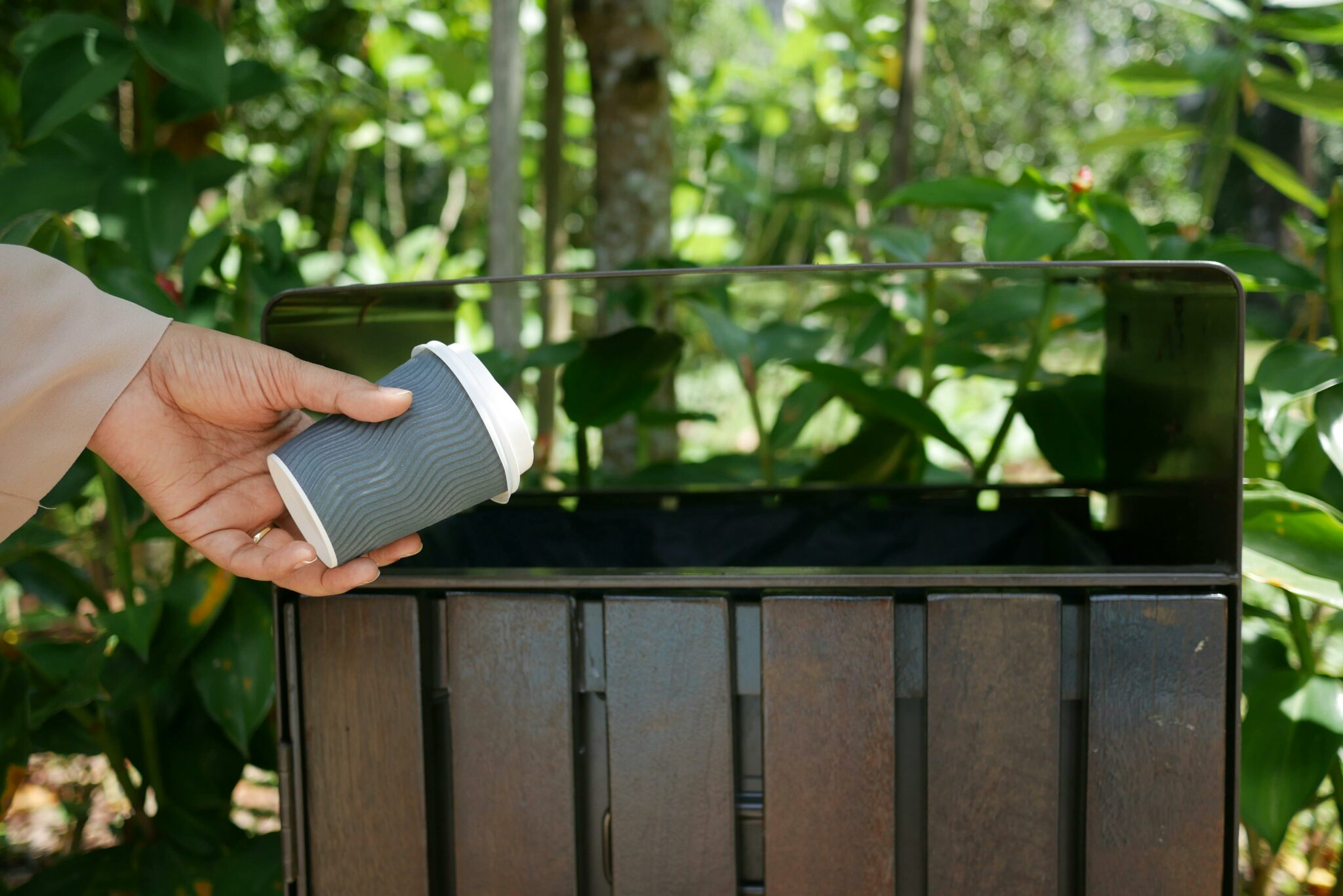
If you’ve ever stood at a rubbish bin clutching your empty coffee cup, wondering whether you’re about to make an environmental win or a recycling faux pas, you’re not alone.
Compostable cups have become increasingly popular across New Zealand, but they’re also one of the most misunderstood items in the waste stream. Most compostable cups are lined with PLA (polylactic acid), a plant-based bioplastic designed to break down in commercial composting facilities. Many people assume that means they’ll break down anywhere, but the reality is a little more complicated.
So let’s bust some common myths and take a closer look at what actually happens to compostable cups in Aotearoa.
Myth #1: “They’ll break down in my backyard compost”
The Reality
Compostable cups are a bit like Goldilocks. They need conditions to be “just right” to break down properly. Most compostable cups use a PLA (polylactic acid) lining made from plant-based materials. To break down properly, PLA requires sustained temperatures of around 55–65°C, along with the moisture, oxygen and microbial activity found in commercial composting facilities.
This is why many compostable cups are certified to standards such as DIN CERTCO, which verifies that they can break down under industrial composting conditions. Home compost systems generally can’t maintain these conditions consistently.
While your backyard compost bin is perfect for food scraps and garden waste, most won’t get hot enough to break down a compostable cup.
Myth #2: “They’ll just break down in landfill”
The Reality
This is one of the most common assumptions people make. And we can see why!
Unfortunately, compostable cups don’t compost in landfill. Modern landfills are engineered to isolate waste from the surrounding environment. While that helps reduce pollution and litter, it also means materials don’t receive the oxygen and biological conditions needed for composting.
When a compostable cup ends up in landfill, it behaves much like other disposable cups, taking up space alongside everything else. Compostable packaging in landfill can generate methane, a potent greenhouse gas, at a higher rate than non-compostables. This is another reason reusable cups remain such a simple solution, because they don’t rely on specialised waste systems to deliver a positive outcome.
Myth #3: “They’re always the greenest option”
The Reality
Compostable cups could be a good choice, but only if they reach the right facility, which seldom happens.
The challenge is that compostable packaging only works when the right infrastructure exists. While some councils and private operators accept certified compostable packaging, access remains inconsistent across New Zealand. A cup’s environmental outcome depends less on what it’s made from and more on whether it reaches the facility it was designed for.
The “greenest” option often depends on where you are and what collection and processing infrastructure is available. A compostable cup that reaches a commercial composting facility is not a bad outcome. But if there’s no way to collect it and get it to a composting facility that will accept it, that same cup will end up in landfill.
The good news? Reusable cups work everywhere. They don’t depend on local composting systems to make a difference.
Myth #4: “Compostable cups can be recycled”
The Reality
This is one of the biggest misconceptions about compostable cups. Because they look and feel like paper cups, many people assume they belong in the recycling bin. But they don’t.
Compostable cups are made with plant-based linings rather than plastic, but that doesn’t make them recyclable through standard kerbside systems. When they end up in recycling, they can contaminate the paper stream and create extra work for recycling facilities.
It’s an easy mistake to make, and one that happens every day. If people can’t confidently tell which bin a cup belongs in, there’s a good chance it ends up in the wrong one.
Myth #5: “They’re better than plastic-lined cups”
The Reality
You’d think this one would be straightforward, but the answer depends on what happens after the cup is used. Traditional paper cups use plastic linings, which means they can’t be recycled. Compostable cups replace plastic with a bio-based alternative.
The “better” option isn’t determined solely by the cup itself. It’s determined by the system it enters after use. A compostable cup that reaches a commercial composting facility is better than a landfill outcome, but a disposable cup of any kind that ends up in landfill? Not so much.
That’s why the most sustainable cup is still the one that’s used again and again.
What You Can Do Instead
The good news is that you don’t need to become a waste expert every time you order a coffee. A reusable cup can replace hundreds of disposable cups over its lifetime, making it one of the simplest ways to reduce waste from your daily coffee habit. Here are a few simple ways to sidestep the disposable cup dilemma altogether.
1. Sit in and enjoy your coffee
Sometimes the simplest option is the best one. If you’ve got a few extra minutes, enjoy your coffee in a ceramic cup. You’ll avoid creating any waste, support your local café, and probably enjoy the experience more too. Coffee just tastes better in a real cup.
2. Bring your own reusable cup
Keeping a reusable cup in your car, bag, or at work makes it easy to choose reuse when you’re on the go. Most cafés across New Zealand are happy to fill reusable cups, and many even offer a discount as a thank you. Even if you only remember it some of the time, those small choices add up quickly over a year.
3. Borrow one instead
Forgot your cup? No problem. Reusable cup-sharing schemes like Again Again and Chunky Cup make it easy to borrow a reusable cup from one participating café and return it to another later. It’s a simple solution that removes the need to remember your own cup while still avoiding single-use waste.
Leave the Guesswork Behind
The compostable cup conversation isn’t about shame. It’s about recognising that even well-intentioned solutions have limitations. The real shift happens when we move away from throwaway thinking altogether.
Next time you’re ordering your flat white, you’ve already got three easy options. Sit, BYO or borrow. Pick whichever fits your day. That’s really all it takes.